
A practical way to translate camping, sports, pets, commuting, road trips, and home projects into vehicle requirements. The useful question is not whether a category sounds impressive, but whether the exact vehicle, configuration, and origin information match the buyer’s real needs.
Begin with the jobs the vehicle must perform
- How many people ride regularly, not only occasionally?
- Which child seats, mobility devices, pets, tools, or sports equipment must fit?
- Is the cargo tall, long, dirty, fragile, or weather-sensitive?
- Will the vehicle tow, and what is the trailer’s loaded weight and tongue weight?
- How tight are the garage, driveway, workplace, and normal parking spaces?
- How far and where will the vehicle travel in winter?
Compare usable space, not category labels
Published cargo volume can hide differences in floor height, opening width, roof shape, seat-folding steps, spare-tire placement, and how much space remains with every passenger aboard. Bring the actual stroller, wheelchair, bins, hockey bags, dog crate, or work equipment to a test fit.
Body-style trade-offs
| Type | Often strong at | Common compromise |
|---|---|---|
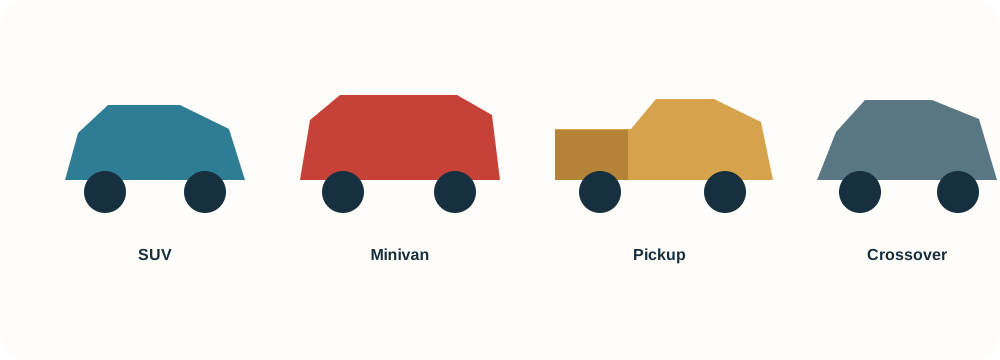
| Minivan | Sliding-door access, low cargo floor, three-row packaging | Ground clearance and image preferences |
| Compact or midsize SUV | Everyday versatility, available AWD, manageable size | Third-row or cargo space may be limited |
| Large SUV | Towing, passenger capacity, enclosed cargo | Cost, fuel use, parking, loading height |
| Pickup | Open cargo, payload, towing, work use | Secure weatherproof storage and rear-seat access vary |
Test the exact trim
Wheel size, suspension, seating package, hybrid battery placement, sunroof, spare tire, tow package, and cab or box length can materially change comfort and capability. Do not assume every version of a nameplate is equivalent.